Allow me to clarify the metaphor implied by the term "singularity." The metaphor implicit in the term "singularity" as applied to future human history is not to a point of infinity, but rather to the event horizon surrounding a black hole. Densities are not infinite at the event horizon but merely large enough such that it is difficult to see past the event horizon from outside.
I say difficult rather than impossible because the Hawking radiation emitted from the event horizon is likely to be quantum entangled with events inside the black hole, so there may be ways of retrieving the information. This was the concession made recently by Hawking. However, without getting into the details of this controversy, it is fair to say that seeing past the event horizon is difficult (impossible from a classical physics perspective) because the gravity of the black hole is strong enough to prevent classical information from inside the black hole getting out.
We can, however, use our intelligence to infer what life is like inside the event horizon even though seeing past the event horizon is effectively blocked. Similarly, we can use our intelligence to make meaningful statements about the world after the historical singularity, but seeing past this event horizon is difficult because of the profound transformation that it represents.
So discussions of infinity are not relevant. You are correct that exponential growth is smooth and continuous. From a mathematical perspective, an exponential looks the same everywhere and this applies to the exponential growth of the power (as expressed in price-performance, capacity, bandwidth, etc.) of information technologies. However, despite being smooth and continuous, exponential growth is nonetheless explosive once the curve reaches transformative levels. Consider the Internet. When the Arpanet went from 10,000 nodes to 20,000 in one year, and then to 40,000 and then 80,000, it was of interest only to a few thousand scientists. When ten years later it went from 10 million nodes to 20 million, and then 40 million and 80 million, the appearance of this curve looks identical (especially when viewed on a log plot), but the consequences were profoundly more transformative. There is a point in the smooth exponential growth of these different aspects of information technology when they transform the world as we know it.
You cite the extension made by Kevin Drum of the log-log plot that I provide of key paradigm shifts in biological evolution (which appears on page 17 of The Singularity Is Near). This extension is utterly invalid. You cannot extend in this way a log-log plot for just the reasons you cite. The only straight line that is valid to extend on a log plot is a straight line representing exponential growth when the time axis is on a linear scale and the a value (such as price-performance) is on a log scale. Then you can extend the progression, but even here you have to make sure that the paradigms to support this ongoing exponential progression are available and will not saturate.That is why I discuss at length the paradigms that will support ongoing exponential growth of both hardware and software capabilities. But it is not valid to extend the straight line when the time axis is on a log scale. The only point of these graphs is that there has been acceleration in paradigm shift in biological and technological evolution.
If you want to extend this type of progression, then you need to put time on a linear x axis and the number of years (for the paradigm shift or for adoption) as a log value on the y axis. Then it may be valid to extend the chart. I have a chart like this on page 50 of the book.
more
{mos_sb_discuss:2}

www.malaymail.com/news/world/2026/01/11/bomb-attac…

BANGKOK, Jan 11 — A series of late-night bomb attacks targeted 11 PTT petrol stations in Thailand’s southern border provinces of Narathiwat, Pattani and Yala…
www.khaama.com/at-least-eight-refugees-die-37-resc…

At least eight refugees died and 37 were rescued when their boat sank off Badmeli near Izmir, Turkish authorities said on Saturday.
katu.com/news/local/oregon-confirms-first-measles-…

Health officials in Oregon have confirmed the state's first measles cases of 2026, with two people diagnosed in Linn County.
abc11.com/post/measles-north-carolina-state-report…
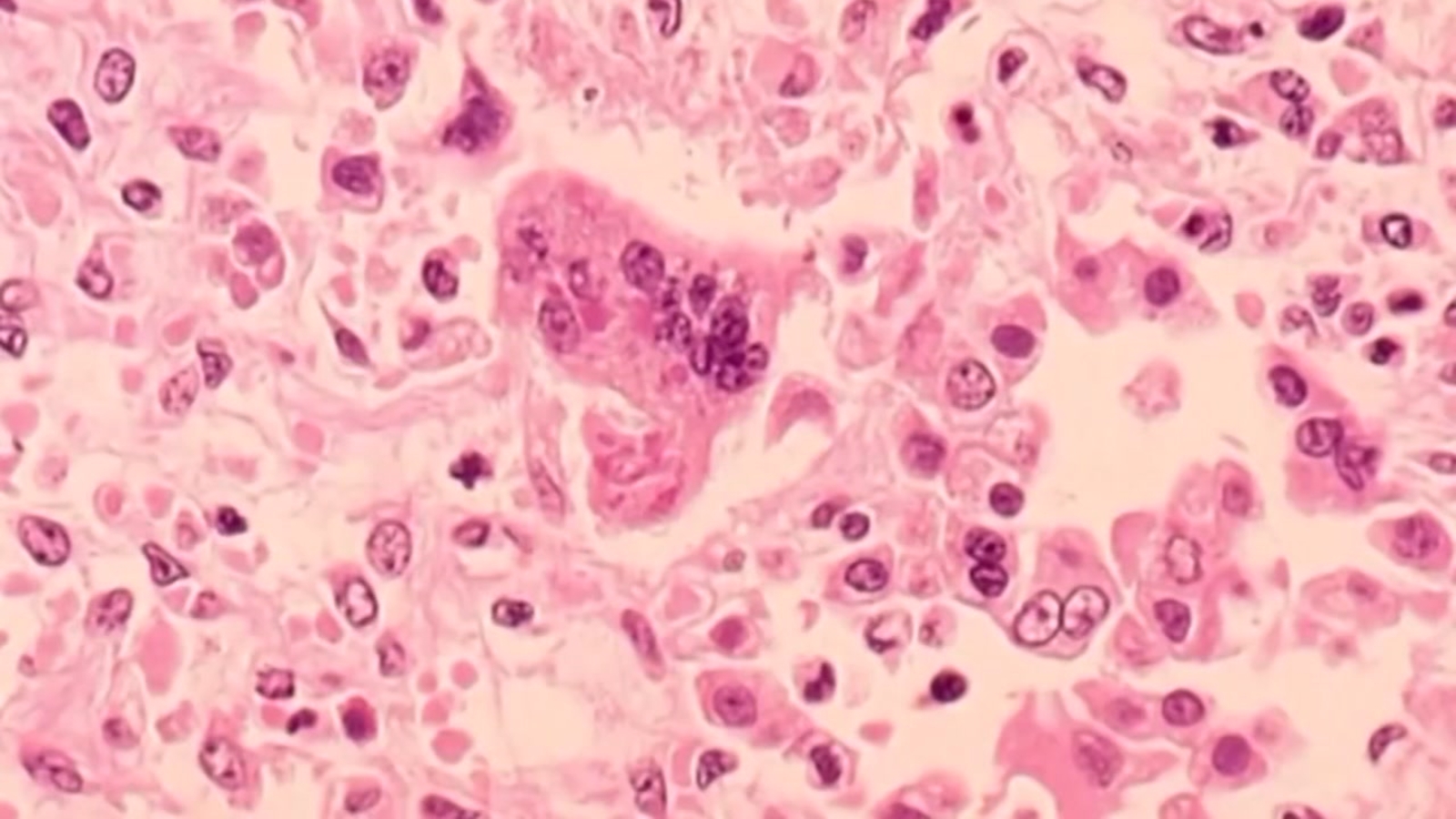
Measles in North Carolina: State reports 5th case linked to South Carolina surge