Kevin Kelly -- The Technium
Feb. 15, 2006 -- There’s a visceral sense we are experiencing a singularity-like event with computers and the world wide web. But the current concept of a singularity is not be the best explanation for the transformation in progress.
The singularity is a term borrowed from physics to describe a cataclysmic threshold in a black hole. In the canonical use, an object is pulled into the center gravity of a black hole it passes a point beyond which nothing about it, including information, can escape. In other words, although an object’s entry into a black hole is steady and knowable, once it passes this discrete point nothing whatever about its future can be known. This disruption on the way to infinity is called a singular event -– a singularity.Mathematician and science fiction author Vernor Vinge applied this metaphor to the acceleration of technological change. The power of computers has been increasing at an exponential rate with no end in sight, which led Vinge to an alarming picture. In Vinge’s analysis, at some point not too far away, innovations in computer power would enable us to design computers more intelligent than we are, and these smarter computers could design computers yet smarter than themselves, and so on, the loop of computers-making-newer-computers accelerating very quickly towards unimaginable levels of intelligence. This progress in IQ and power, when graphed, generates a rising curve which appears to approach the straight up limit of infinity. In mathematical terms it resembles the singularity of a black hole, because, as Vinge announced, it will be impossible to know anything beyond this threshold. If we make an AI which in turn makes a greater AI, ad infinitum, then their future is unknowable to us, just as our lives have been unfathomable to a slug. So the singularity became a black hole, an impenetrable veil hiding our future from us.
Ray Kurzweil, a legendary inventor and computer scientist, seized on this metaphor and applied it across a broad range of technological frontiers. He demonstrated that this kind of exponential acceleration is not unique to computer chips but is happening in most categories of innovation driven by information, in fields as diverse as genomics, telecommunications, and commerce. The technium itself is accelerating in its rate of change. Kurzweil found that if you make a very crude comparison between the processing power of neurons in human brains and the processing powers of transistors in computers, you could map out the point at which computer intelligence will exceed human intelligence, and thus predict when the cross-over singularity would happen. Kurzweil calculates the singularity will happen about 2040. That seems like tomorrow, which prompted Kurzweil to announce with great trumpets that the “Singularity is near.” In the meantime everything is racing to that point -– beyond which it is impossible for us to imagine what happens.
more
{mos_sb_discuss:2}

www.malaymail.com/news/world/2026/01/11/bomb-attac…

BANGKOK, Jan 11 — A series of late-night bomb attacks targeted 11 PTT petrol stations in Thailand’s southern border provinces of Narathiwat, Pattani and Yala…
www.khaama.com/at-least-eight-refugees-die-37-resc…

At least eight refugees died and 37 were rescued when their boat sank off Badmeli near Izmir, Turkish authorities said on Saturday.
katu.com/news/local/oregon-confirms-first-measles-…

Health officials in Oregon have confirmed the state's first measles cases of 2026, with two people diagnosed in Linn County.
abc11.com/post/measles-north-carolina-state-report…
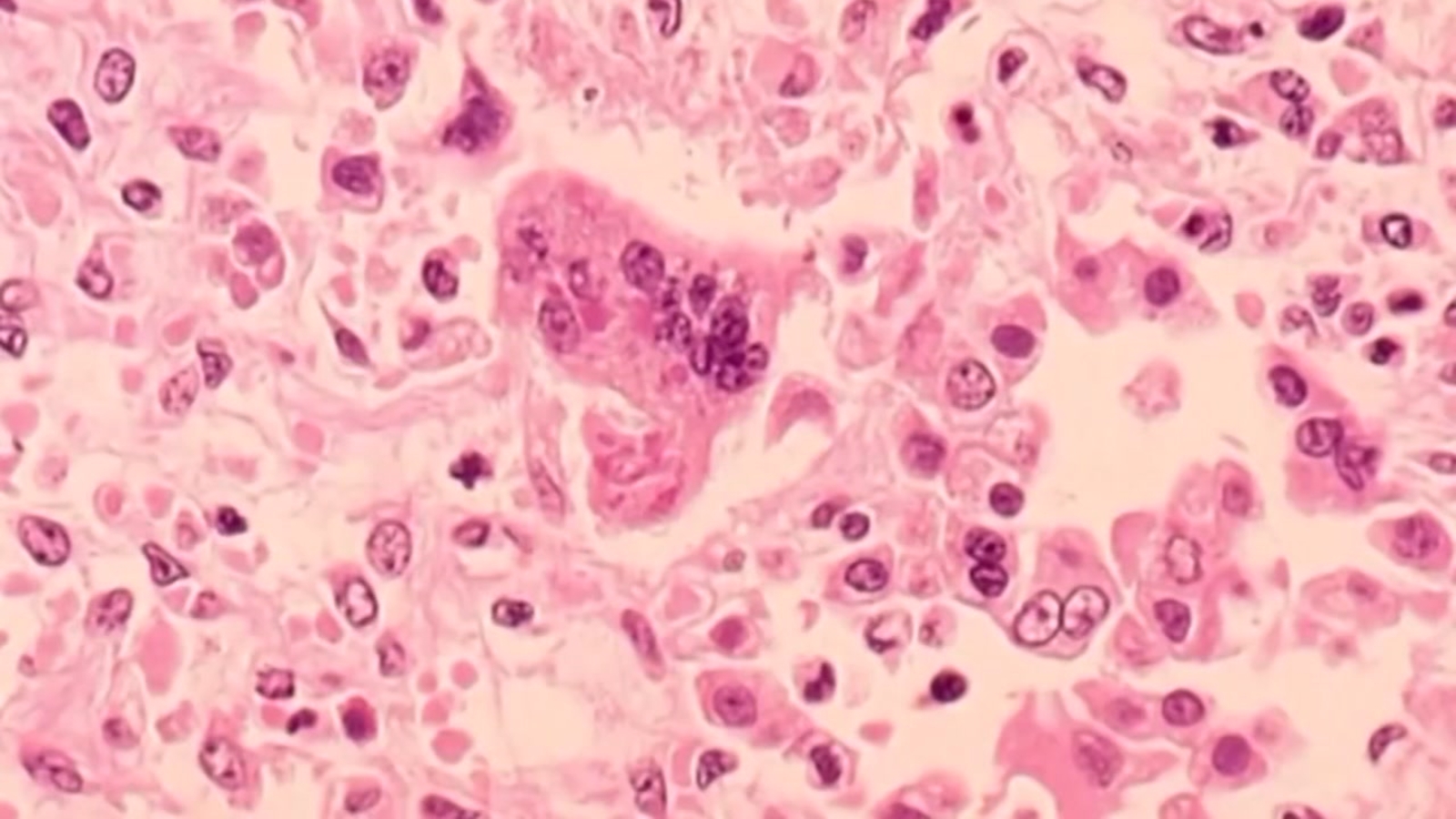
Measles in North Carolina: State reports 5th case linked to South Carolina surge