Sleepwalking into the Imperial Dark: What It Feels Like When a Superpower Runs Off the Tracks (Tom Engelhardt)
Apr. 19, 2011 (TomDispatch.com) -- This can’t end well.
But then, how often do empires end well, really? They live vampirically by feeding off others until, sooner or later, they begin to feed on themselves, to suck their own blood, to hollow themselves out. Sooner or later, they find themselves, as in our case, economically stressed and militarily extended in wars they can’t afford to win or lose.
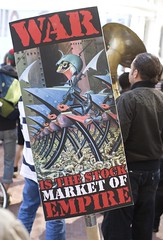
Historians have certainly written about the dangers of overextended empires and of endless war as a way of life, but there’s something distant and abstract about the patterns of history. It’s quite another thing to take it in when you’re part of it; when, as they used to say in the overheated 1960s, you’re in the belly of the beast.
I don’t know what it felt like to be inside the Roman Empire in the long decades, even centuries, before it collapsed, or to experience the waning years of the Spanish empire, or the twilight of the Qing dynasty, or of Imperial Britain as the sun first began to set, or even of the Soviet Empire before the troops came slinking home from Afghanistan, but at some point it must have seemed at least a little like this -- truly strange, like watching a machine losing its parts. It must have seemed as odd and unnerving as it does now to see a formerly mighty power enter a state of semi-paralysis at home even as it staggers on blindly with its war-making abroad.
- Categories
- Date rangeThursday, April 21, 2011
